

 Share by email
 Share on Facebook
 Share on Linkedin
 Share on X
 Share on WhatsApp

European Comfort Food Recipes: 5 Classics Revisited with Goat Cheese

Why goat cheese works so much with Italian flavours
Many ingredients commonly found in Italian cooking create an appealing contrast or complement to goat cheese. Tomatoes and roasted vegetables bring sweetness, while basil, parsley and other herbs add freshness. Mushrooms and aubergines introduce deeper, earthy notes, and olives or cured meats bring a more savoury dimension.
Goat cheese fits into these combinations in different ways. A fresh cheese brings a creamy contrast to vegetables, while a more mature or ripened goat cheese gives the dish greater intensity and more defined pieces. With pesto or tomato-based preparations, a small amount of goat cheese also makes an effective finishing touch without dominating the other flavours.
The result depends as much on the format as on the ingredients around it.
5 European Comfort Food Classics to Try with Goat Cheese
From golden gratins to savoury dumplings, these five dishes showcase different ways of cooking with goat cheese.
- Germany – Käsespätzle: mild goat cheese adds creaminess and a delicate tangy note.
- Spain – Tortilla Española: fresh goat cheese creates deliciously creamy pockets among the potatoes and eggs.
- Italy – Vegetable Lasagne: fresh goat cheese adds a smooth, creamy touch that pairs perfectly with vegetables.
- Belgium – Chicons au Gratin: mild goat cheese brings a subtle tanginess to the endives, ham and béchamel.
- Poland – Pierogi Ruskie: fresh goat cheese adds a delicate tanginess to the traditional potato and cheese filling.
Germany: Käsespätzle with Goat Cheese
Popular in southern Germany, particularly in Swabia and Bavaria, Käsespätzle is a hearty dish made with soft egg noodles, melted cheese and golden fried onions.
Sometimes compared to macaroni and cheese, this German speciality has a distinctive texture thanks to its irregularly shaped Spätzle and its combination of cheeses.
Traditionally prepared with varieties such as Emmental or mountain cheese, Käsespätzle can also accommodate a milder, creamier addition.

How to incorporate goat cheese for Käsespätzle ?
For four servings, try replacing part of the traditional cheese with approximately 80–100 g of mild goat cheese, while keeping around 150 g of a good melting cheese.
Stir the cheeses into freshly cooked, hot Spätzle over low heat. The goat cheese will soften and blend into the mixture, while the traditional cheese helps create the familiar melted texture.
Cooking tips
Reserve a few tablespoons of Spätzle cooking water to loosen the cheese mixture if it becomes too thick. Fry the onions separately until golden, then add them just before serving to preserve their crispness.
For an extra touch of freshness, sprinkle with finely chopped chives or parsley.
The mild tanginess of goat cheese pairs particularly well with the sweetness of cooked onions, bringing a new dimension to this comforting German classic.
Spain: Tortilla Española with Goat Cheese
A Spanish classic with an irresistibly creamy centre ! Few dishes represent Spanish home cooking as well as Tortilla Española. Made primarily with potatoes, eggs and olive oil, with onions included in many versions, this thick omelette is a staple of Spanish cuisine.
Served warm or at room temperature, it works equally well as a family meal, a light lunch or a tapas dish.
Its simple ingredients also make it an excellent base for experimenting with different flavours.

How to incorporate goat cheese in tortilla Española ?
For a tortilla made with approximately 500 g of potatoes and six eggs, add 80–100 g of fresh goat cheese.
First, cook the sliced potatoes slowly in olive oil until tender. If using onions, cook them until softened. Drain off excess oil, then combine everything with the beaten eggs.
Break the goat cheese into small pieces and gently fold them into the mixture before transferring it to the frying pan.
Cooking tips
Distribute the cheese evenly rather than mixing it completely into the eggs. This creates small, creamy pockets throughout the tortilla.
Cook over medium-low heat to allow the centre to set without overbrowning the outside. A non-stick frying pan makes turning the tortilla easier.
Fresh parsley, chives or a little black pepper can enhance the flavour without overwhelming the traditional combination of potatoes and eggs.
For an easy variation, serve your goat cheese tortilla with a simple tomato salad dressed with olive oil.
Italy: Vegetable Lasagne with Goat Cheese
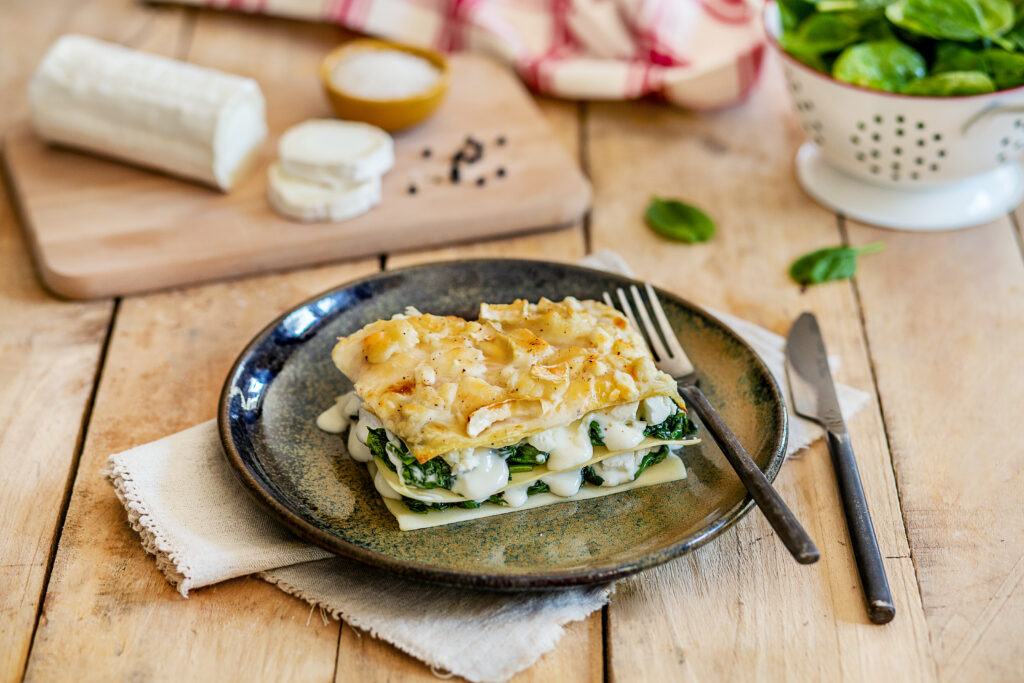
An Italian-inspired family favourite full of flavour. With its layers of pasta, vegetables and sauce, lasagne is one of Europe’s most recognisable comfort foods.
Italian lasagne comes in numerous regional variations, while vegetable-based interpretations are particularly versatile. Spinach, courgettes, mushrooms, tomatoes and roasted peppers can all create delicious combinations. Goat cheese brings an interesting contrast to the natural sweetness of roasted vegetables, making it a welcome addition to a homemade vegetable lasagne.
How to incorporate goat cheese in vegetable lasagne ?
For a medium-sized lasagne serving four to six people, try combining approximately 150 g of fresh goat cheese with spinach, courgettes and a tomato-based sauce.
Instead of adding thick pieces of cheese directly between the pasta sheets, blend the goat cheese with a few spoonfuls of béchamel. This makes it easier to spread and helps distribute its flavour evenly.
Alternate layers of pasta, vegetables, tomato sauce and the goat cheese mixture before finishing with béchamel and a little grated cheese for a golden topping.
Cooking tips
Cook courgettes and spinach beforehand to remove excess moisture. Otherwise, the vegetables may release too much water during baking.
Make sure the pasta sheets are sufficiently covered with sauce, particularly if using dried lasagne sheets that do not require pre-cooking.
For a richer flavour, try pairing goat cheese with roasted peppers and aubergines. Their sweetness complements the cheese’s slightly tangy character.
Allow the lasagne to rest for around 10 minutes after removing it from the oven. This helps the layers hold together when serving.
Belgium: Chicons au Gratin with Goat Cheese
A Belgian oven-baked classic with extra character. In Belgium, chicons au gratin, also known as endives au jambon, is a much-loved family dish, especially during the colder months.
It traditionally consists of cooked Belgian endives wrapped in ham, covered with béchamel sauce and grated cheese, then baked until golden.
What makes this dish special is the contrast between the slight bitterness of the endives, the savoury flavour of the ham and the richness of the sauce.
Adding goat cheese introduces another layer of flavour while preserving the dish’s familiar character.

How to incorporate goat cheese in Chicons au Gratin ?
For a gratin made with four large endives, try adding approximately 60–80 g of mild goat cheese to the béchamel sauce.
Once the sauce is prepared, remove it from direct heat and whisk in the goat cheese until it softens and is well incorporated.
Wrap the cooked endives in slices of ham, arrange them in a baking dish and cover with the goat cheese béchamel.
Add a little grated cheese on top before baking for a beautifully golden crust.
Cooking tips
Endives contain a considerable amount of water, so drain them thoroughly after cooking. Gently pressing out excess moisture helps prevent a watery gratin.
Choose a mild goat cheese rather than a strongly matured variety to avoid overpowering the delicate bitterness of the endives.
Serve with mashed potatoes or crusty bread to make the most of the creamy sauce.
The result is a comforting Belgian favourite with a subtle tangy note that balances the richness of the gratin.
Poland: Pierogi Ruskie with Goat Cheese
Pierogi are among Poland’s most iconic traditional foods. These tender dumplings can be filled with many different ingredients, from mushrooms and cabbage to potatoes, cheese or fruit.
One of the best-known savoury varieties is pierogi ruskie, traditionally filled with mashed potatoes, onions and twaróg, a fresh curd cheese commonly used in Polish cooking.
The filling is simple but satisfying, combining the softness of potatoes with the slightly tangy flavour of fresh cheese.

How to incorporate goat cheese in Pierogi Ruskie ?
To preserve the traditional texture, replace only part of the twaróg with firm fresh goat cheese.
For example, when preparing a filling with 300 g of cooked potatoes, try combining approximately 100 g of twaróg with 50 g of fresh goat cheese, adjusting the seasoning and consistency to taste.
Mash the potatoes until smooth, then mix in the cheeses and finely chopped fried onions.
Season with salt and freshly ground black pepper.
Cooking tips
Avoid using an overly soft or runny goat cheese, as the filling needs to hold its shape when enclosed in the dough.
Let the potato mixture cool before filling the pierogi. A cool filling is easier to handle and helps prevent the dough from becoming sticky.
Cook the filled dumplings in gently boiling water until they float, then continue cooking briefly until the dough is fully cooked.
For an additional layer of texture, lightly pan-fry the boiled pierogi in butter until golden on both sides.
Serve with fried onions or a spoonful of sour cream for a traditional finishing touch.
The goat cheese adds a delicate tanginess that works particularly well with the potatoes and sweet fried onions, without completely changing the identity of this Polish classic.
Give European Comfort Food Classics a Fresh Twist
From creamy German Käsespätzle and Spanish tortilla to Italian vegetable lasagne, Belgian endive gratin and Polish pierogi, European comfort food offers endless opportunities for culinary creativity.
Revisiting these dishes with goat cheese doesn’t mean abandoning tradition. It’s about finding new ways to enjoy familiar flavours, experimenting with different textures and discovering how a simple ingredient can transform an everyday meal.
Whether you prefer a mild, creamy variety or a more mature cheese with a distinctive character, goat cheese can bring something special to your favourite homemade recipes.
Looking for more cooking inspiration? Explore Soignon’s goat cheese recipes and discover new ways to enjoy this versatile ingredient in your everyday meals.




Your health questions
A milk protein allergy or lactose intolerance: what's the difference?
Confusion between milk protein allergies and lactose intolerance is a regular occurrence, as both are associated with the same food: milk. Looking beyond the food itself, digestive symptoms can often be similar for both conditions. However, there are major differences in terms of mechanisms of action, seriousness of the symptoms and as a result, how the condition is managed. Read on for key information and practical recommendations for telling the difference between an allergy and an intolerance.

Our tasting tips
How to Use Goat Cheese in Classic Italian Dishes
Italian cooking is full of familiar flavours that pair naturally with goat cheese: ripe tomatoes, fragrant basil, roasted vegetables, mushrooms, olives, herbs and pesto, to name just a few. Exploring goat cheese in Italian cuisine does not mean replacing the cheeses traditionally associated with these dishes. Instead, it offers another way to interpret familiar favourites — bringing creaminess, a distinctive flavour or a different texture while preserving the character of the original dish.
From pizza and pasta to risotto and bruschetta, the key is choosing the right type of goat cheese for the role you want it to play.

Our tasting tips
Perfect sweet pairings to enhance goat cheese
Not just a mere fad, pairing sweet and savory in your cooking can bring out some unexpected flavours! Cheeses and yogurts made from goat milk are especially suited to these amazing and delicious combinations. Discover a few perfect pairings that elevate goat cheese and will surprise your guests on your next cheese board, appetizer or cheese dinner with friends.
Continue to another language
You are about to be redirected to another language version of the site. The content and products may differ from those offered here.